

Falconry is far more than simply working with a bird of prey. It is a way of life built around patience, dedication, problem solving and continuous learning.
From August through to May, much of my time is spent in the field with my birds. Every day brings something different. Weather, terrain, fitness and the behaviour of the bird all play a part, and a good falconer must constantly adapt.
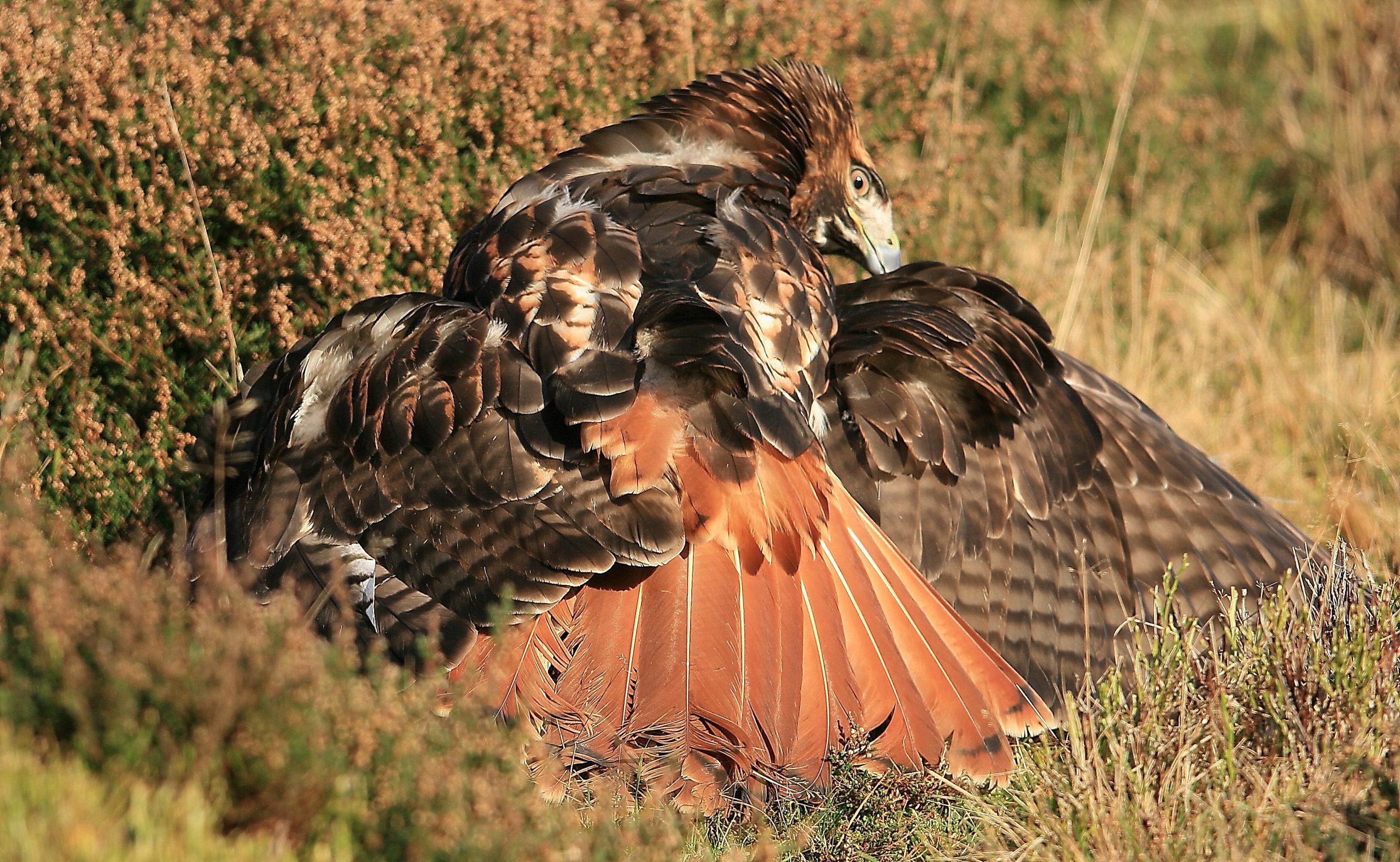
I currently work with a maximum of two birds of prey on my experience days: a female Red-Tailed Hawk and a male Harris’ Hawk. Keeping the number of birds small allows me to dedicate the time each bird deserves.
Building a Partnership
The relationship between a falconer and a raptor develops through time spent together. There are no shortcuts.
Hours in the field allow the bird to fly, explore and develop its natural abilities while the falconer learns to understand its behaviour. Fitness is maintained through regular flying, while the freedom and enrichment that come from being outdoors are an essential part of the experience.
For me, the goal is not simply to demonstrate a bird flying from one perch to another. It is to create an opportunity to see a trained raptor doing what it was born to do: flying freely across the landscape.
Why Time Matters
Falconry requires commitment. A bird cannot be properly understood or developed through occasional interaction. The more time you spend in the field, the more you learn about the individual bird and the partnership you are developing.
This is one of the reasons my experiences are deliberately kept small. Rather than managing a large collection of birds, I concentrate on a maximum of two birds during experience days.
That means more time flying, more time observing and, most importantly, more time allowing the birds to enjoy the freedom of the countryside.
A Different Kind of Experience
My background in the British Army Infantry and later as a full-time firefighter in the WMFS Technical Rescue Unit taught me the importance of preparation, discipline and working as a team.
Falconry demands many of the same qualities. Conditions can change, plans sometimes need to be adapted and every flight requires concentration.
For me, falconry brings all of these elements together with a deep appreciation for the birds themselves.
It is demanding, occasionally challenging and requires enormous dedication. But standing in the field and watching a raptor disappear into the sky before returning to the partnership you have built together makes every hour worthwhile.