

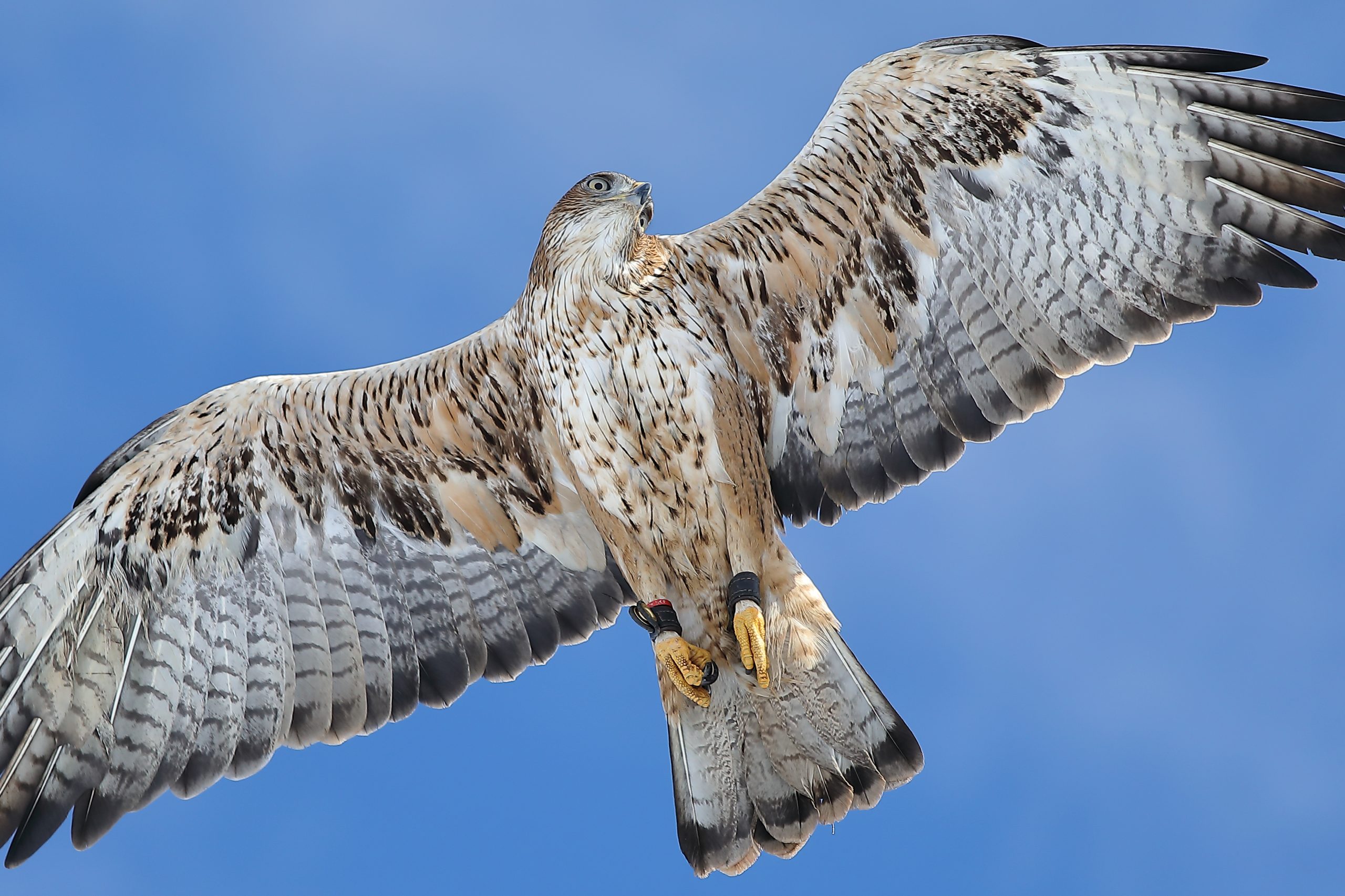
There is a significant difference between watching a bird of prey fly in a controlled arena and seeing a trained raptor experience genuine freedom in the countryside.
My falconry experiences are designed around free flight and time spent in the field. There are no large groups and no artificial restrictions on the birds’ flying space.
Instead, the focus is on giving the raptors the opportunity to fly, soar and explore while you experience falconry as it is practised in the field.
Following the Birds Into the Countryside
A typical day can involve hours outdoors, following the birds across open countryside. Depending on conditions, the birds can reach heights of up to around 1,000 feet and cover more than 20 miles.
Seeing a raptor climb into the sky and become a tiny silhouette above the landscape gives you an entirely different appreciation of these remarkable birds.
The experience is not about ticking off a list of demonstrations. It is about observing the relationship between bird and falconer and seeing how training, fitness and trust come together during a flight.
Why Smaller Groups Matter
Working with a maximum of two birds allows me to concentrate on providing quality time in the field.
The birds need regular flying to maintain their fitness, but they also need freedom and enrichment. Keeping the number of birds I work with limited means I can devote substantial time to each individual bird.
It also means the people joining me can spend more time actually experiencing falconry rather than waiting for their turn.
Falconry Is Not a Show
A falconry experience should provide an insight into the life of a falconer and the partnership developed with a bird of prey.
That means accepting that nature does not operate according to a timetable. Weather conditions, thermals and the behaviour of the bird all influence the day.
This unpredictability is part of what makes free-flight falconry so rewarding.
You are not simply watching a bird perform a routine. You are witnessing a living, highly intelligent predator exercising its natural abilities in an environment where it can truly stretch its wings.
That is what I want people to take away from their experience: not just memories of a bird flying, but an understanding of the dedication and commitment required to develop a genuine partnership with a raptor.